The Misunderstood “Honor”
For many families, naming an executor feels straightforward.
You choose someone you trust - often a child, sometimes the oldest, occasionally the one who seems most responsible - and you assume they will “handle things” when the time comes.
It’s often described as an honor.
And in many ways, it is.
But what most families don’t realize is this:
Being an executor is not just an honor. It is a legal job - with real responsibility, real complexity, and real personal liability. And most executors don’t know about the liabilities OR how to manage, reduce, or eliminate them.
In our experience working with Pennsylvania families, the issue is not that people choose the wrong executor intentionally. And it’s not that executors intentionally create problems.
It’s that they - and the people they choose - don’t fully understand what the role actually involves and how to protect the beneficiaries while also protecting themselves.
And that gap between expectation and reality is where problems begin.
What Being an Executor Really Means
At its core, an executor is responsible for administering an estate properly under Pennsylvania law.
That sounds simple. It is not.
An executor must:
- Locate, secure, inventory, all assets
- Gather, organize, and properly value and insure those assets (sometimes requiring appraisals)
- Coordinate probate assets and non-probate assets (those passing by beneficiary designation, joint ownership, or through one or more trusts)
- File the will with the court
- Notify beneficiaries and creditors as required by law
- Ensure appropriate insurance coverage remains in place (real estate, vehicles, business interests, liability coverage)
- Pay valid debts and expenses
- Communicate important information to beneficiaries and other interested parties
- File required tax returns (income tax, and sometimes estate/inheritance or death taxes)
- Manage assets during administration (sometimes for months or years)
- Make distributions - correctly and at the right time and either obtain a signed family settlement agreement OR get court approval of their work in order to eliminate personal liability.
And throughout the process, they must:
- Keep accurate records
- Communicate appropriately with beneficiaries
- Follow legal procedures and deadlines, and to
- Act in the best interests of the estate and its beneficiaries
Here’s the key point most people miss:
Executors have a very important set of jobs AND are personally responsible for getting this right.
But there is another key point that is just as important - and often overlooked:
Executors do not have to do everything themselves - but they must ensure everything is done correctly.
That distinction is where both risk and opportunity lie.
The Three Risks Most Executors Never See Coming
1. Personal Liability (Including Investment Mistakes)
Many executors assume that as long as they “act in good faith,” they are protected.
That is not always the case.
Executors can face personal liability for:
- Paying the wrong creditor
- Distributing assets too early
- Failing to reserve for taxes
- Missing filing deadlines
- Undervaluing or mismanaging assets
- Making poor or imprudent investment decisions during administration
Real risk example:
An executor distributes most of the estate to beneficiaries, believing all obligations are satisfied. Months later, a tax liability emerges. The estate no longer has sufficient funds.
The result?
The executor - not the beneficiaries - may be responsible for making up the difference.
But this can be avoided or minimized by getting the right advice about the law and legal issues.
2. Family Conflict
Even in close families, the executor role can create tension:
- Perceived unfairness
- Miscommunication
- Delays leading to suspicion
- Old sibling dynamics resurfacing
Executors don’t just manage assets - they manage expectations, perceptions, and emotions.
Without structure and guidance, from advisers that have experience with these matters, that burden can become overwhelming.
3. The Financial, Emotional, and Time Cost of Mistakes
Estate administration is not quick. Sometimes (even when the estate is simple) there are creditors and taxes to pay, real estate or other assets to be liquidated, and other time consuming tasks.
It often involves:
- Strict deadlines
- Detailed filings
- Ongoing coordination
- Sales of assets
- Management of cash and investment assets
Mistakes - or even delays - can lead to:
- Legal fees
- CPA costs
- Penalties and interest
- Delayed distributions
- Litigation among family members
And beyond financial cost:
- Stress
- Time commitment (often hundreds of hours)
- Strained or permanently damaged relationships
What should have been a smooth process can become expensive, time-consuming, and emotionally draining.
Why Good People Still Get This Wrong
Most executors who run into trouble are:
- Intelligent
- Honest
- Trying to do the right thing
So why do problems occur?
Because:
- They’ve never done this before
- The rules are often strict but aren’t intuitive
- They underestimate the time and complexity
- They don’t know what can be legally delegated - and what cannot
- They don’t always bring in the right help at the right time
- They sometimes overpay for help
Intelligence and integrity are not enough. This role requires guidance and coordination.
What Smart and Wealthy Families Do Differently
(And What Everyone Should Consider)
Families who handle this well approach it differently.
1. They Choose Executors Thoughtfully
They don’t automatically choose:
- The oldest child
- The closest child
- Or even the most responsible
Instead, they consider:
- Objectivity
- Availability
- Ability to handle complexity
- Family dynamics
- Experience and training
They may also:
- Appoint co-executors
- They might include a professional fiduciary (such as a bank, trust company, or professional) when family members have conflicts, are unqualified, or need help
- Or select someone outside the immediate family
2. They Combine Family Involvement With Professional Expertise
This is where the real opportunity lies.
Rather than having:
- The executor try to do everything, and/or
- Professionals do everything at significant cost
Smart families create a hybrid approach:
- Family members or friends acting as executors or co-executors handle appropriate administrative tasks
- Professionals focus on legal, tax, and strategic decisions to be provided at negotiated and fair prices
This can:
- Reduce overall costs
- Improve efficiency
- Keep control within the family
- Ensure high-risk decisions are handled properly
The goal is not to replace friends or family members with professionals - it is to use them strategically.
3. They Build and Coordinate a Team
A well-functioning executor rarely works alone.
Instead, they operate as the quarterback of a team, which may include:
- Estate planning counsel
- A CPA
- Financial advisors
- Insurance advisors
The key is coordination. That is typically handled by the law firm retained to assist the executor(s) and to co-ordinate work and get it to the right team members to provide services that they are uniquely equipped to do.
When this process is done correctly:
- Professionals individually focus on what matters most and that they know how to do
- Redundant or unnecessary work is avoided
- Costs are controlled
- Risk of mistakes and penalties is reduced
A coordinated team can often do the job better - and at lower overall cost - than an uncoordinated group working independently.
The Role of Executor Training
This is where everything comes together.
Most executors are placed into their role:
- Without training
- Without context
- Without a plan
That’s where inefficiency and risk begin.
But when executors are prepared in advance:
- They understand what they can handle themselves
- They know when to bring in professionals
- They avoid unnecessary delegation
- They reduce duplication of effort
- They make better decisions
The result?
Lower cost. Lower risk to the beneficiaries AND to the executor(s). Better outcomes.
What Training Changes
Executor training helps individuals:
- Understand their responsibilities clearly
- Avoid common (and costly) mistakes
- Coordinate effectively with professionals
- Keep administration on track
- Reduce family tension through better communication
How We At Unruh, Turner, Burke and Frees Can Help
In addition to providing legal services to executors and their teams, following the death of a loved one, we also offer several options to help families and executors to prepare in advance:
A Pre-Recorded Executor Training Webinar
Designed for Pennsylvania families to help executors:
- Understand their role
- Avoid costly mistakes
- Navigate the process more efficiently
This is a flat fee of $97.00 for our VIP clients or their family members.
Customized Executor Training and Family Meetings
For families who want a more tailored approach, we offer:
- Family briefings
- Executor-specific preparation sessions
- Coordination with advisors
These sessions are particularly valuable in:
- Larger or more complex estates
- Families with multiple beneficiaries
- Situations where minimizing cost and conflict is critical
These programs can vary from individual to individual and flat fees can be set prior to any financial obligation. These trainings and family meeting can be a single 90 minute session or multiple detailed sessions and the prices start at $995.
The best executors are not chosen - they are prepared and supported.
The best way to purchase and to get access to either of these programs is to call Lisa Snyder at 610-933-8069. In the case of custom plans, you will receive a written fee agreement and written materials as well as free access to the video training.
To help you to see the advantage of careful executor selection and training, here are two hypothetical scenarios based on our real-world experience over 40 years of practice.
Two Real-World Contrasts
Scenario 1: Preparation Reduced Cost and Stress
A Pennsylvania family took a proactive approach:
- They consulted counsel about who can and should act as executor
- They had a family meeting with their children to explain the role of the executor and the estate plan
- After that, their executor then completed a detailed video/in person training
- A team of financial, insurance, legal and tax accounting advisers was identified in advance
- The executor understood that they were the ultimate responsible party but responsibilities were clearly divided among the team for maximum benefit
The result:
- The executor handled appropriate administrative tasks
- Professionals focused on higher-value legal and tax issues
- Costs were controlled
- Deadlines were met
- Bills were paid in the right order
- Income and death taxes were all filed and minimized
- The estate was administered efficiently
- Family relationships remained intact
Scenario 2: No Preparation, Higher Cost and Conflict
In another case:
- The decedent selected a child with no financial experience and who was “bad with deadlines” and who had previous poor relationships with beneficiaries.
- The executor had no training and no guidance
- Tasks were either mishandled or over-delegated
- Deadlines were missed and penalties were imposed
- Communication broke down
- Relationships were damaged
The result:
- Higher professional fees
- Delays
- Increased stress
- Family tension
What could have been efficient became both expensive and difficult.
A Simple Self-Check
Ask yourself:
- Is your choice of executor appropriate?
- Does your executor know they’ve been named?
- Do they understand what the role really involves?
- Do they know what they can handle - and what requires help?
- Do they have a team - or will they build one under pressure?
- Have they received training on the role and duties
If the answer is unclear, this is an opportunity to improve your plan.
If you need or want our assistance with that process, just call us at 610-933-8069 for an appointment to update your estate plan.
Reframing the Role
Being an executor is one of the most important roles in your estate plan.
It affects:
- Cost
- Efficiency
- Family harmony
- Your legacy
This is not just about administration. It is about protecting your family, your executor, and what you’ve worked to build.
What To Do Next
If you have named - or are considering naming - an executor:
Register for Access To Our Pre-Recorded Executor Training Webinar
Designed to help executors understand their role and avoid unnecessary cost, risk, and conflict.
Consider a Family or Executor Planning Session
We can help you:
- Prepare your executor in advance
- Build a coordinated team
- Reduce costs while improving outcomes
To do either or both, call our office at 610-933-8069. The pre-recorded training is $97.00 and free if you retain the firm for a family meeting or customized training.
And Coming Next…
“What Being a Trustee Really Means”
A deeper look at the responsibilities - and risks - of trustees.
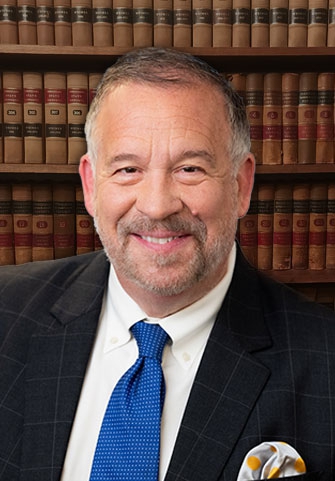
About The Author: David M. Frees III
David M. Frees, III, J.D. is Co-Chair of the Trust, Estates & Wealth Preservation Section at Unruh, Turner, Burke & Frees, P.C. He has practiced in the areas of estates, trusts, asset protection, and wealth preservation for nearly four decades and was an early adopter of trust protector provisions in Pennsylvania domestic planning.
Mr. Frees has:
- Been selected for many years to Best Lawyers in America® and Pennsylvania Super Lawyers®
- Received a 10.0 “Superb” rating from AVVO
- Lectured for the Pennsylvania Bar Institute and at institutions including Harvard, Yale, Dickinson, ASU, and Cornell
- Served on the boards and trust committees of multiple trust companies
Unruh, Turner, Burke & Frees, P.C. has offices in Phoenixville and West Chester, and the Trust, Estates & Wealth Preservation Section has helped thousands of Pennsylvania families design plans that:
- Protect heirs from divorce, lawsuits, and business creditors
- Minimize taxes and administrative hassle
- Preserve privacy and family control
- Keep more of what you’ve built in the hands of the people you love
Important Disclosures
This article is for educational purposes only and does not constitute legal or tax advice. Laws change, and their application depends on your specific facts and circumstances.
If you’d like advice on your situation, please call our office at 610-933-8069 to schedule a confidential consultation.